
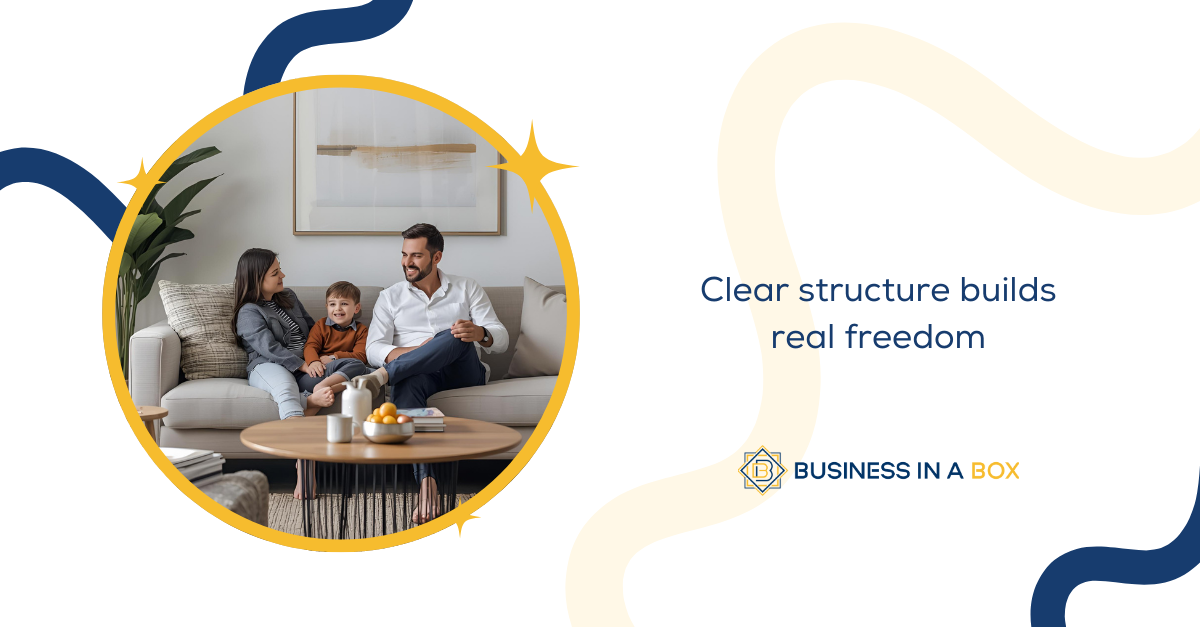
The idea of freedom becomes more meaningful as your career evolves.
Senior executives often reach a point where titles feel less important than time. You want presence with your family. You want space to think. You want control over your schedule without losing financial stability. When you start exploring ownership, this desire grows stronger.
The strain appears when freedom feels abstract. You know you want it, but the path to it looks unclear. Many leaders assume freedom happens through income alone. In reality, it happens through structure. Predictable plans. Clear responsibilities. A model that supports both performance and personal well-being.
Ownership becomes steady when your business aligns with how you want to live.
What does freedom look like for an experienced leader?
Freedom means something different for every executive. For some, it is the ability to eat dinner with family without rushing. For others, it is attending school events or taking long weekends without rearranging the entire calendar. Some value morning workouts and quiet thinking hours. Others want space to travel while keeping operations stable.
Defining freedom gives direction. It becomes a filter during franchise evaluation. It guides which models feel supportive and which create strain. When this definition is clear, decisions become easier, and alignment becomes natural.
A strong franchise choice grows from clarity, not guesswork.
How do semi-absentee models shape time flexibility?
Semi-absentee franchises offer a structured path for executives who want ownership without full-time involvement. These models run with a manager on site and allow owners to focus on leadership, financial oversight, and long-term planning. Time commitments usually fall between ten and fifteen hours per week once the business is established.
This model appeals to high-performing leaders because it mirrors the rhythm you already follow. Strategic work at the top. Skilled operators handling the rest. When the brand provides strong training and a clear system, the model feels predictable and manageable.
Semi-absentee ownership creates space for family, health, and personal commitments while still building long-term equity.
What is the trade-off between freedom and control?
Every ownership choice carries a balance. More freedom often means less direct control. More control often means more daily involvement. This trade-off becomes clearer when you understand the structure of the brand you are evaluating.
A model with tight systems and strong managerial training gives owners more distance. A model that requires constant hands-on decisions gives owners more involvement. Neither path is right or wrong. The key is alignment with your life, energy, and long-term plans.
Understanding this balance helps you choose a business that supports your strengths instead of competing with them.
How do systems protect both income and lifestyle?
Clear structure creates stability. It lowers stress. It gives your days a steady rhythm. A strong franchise provides documented processes, daily checklists, and organized operational tools that keep information easy to manage. These resources free you to lead without holding every detail in your head.
When the framework is consistent, cash flow becomes consistent. When cash flow steadies, lifestyle steadies. This is the point where many executives feel the impact of choosing a well-organized model. The business begins to support your life instead of competing with it.
Reliable guidance protects income, relationships, health, and the time you want to reserve for the people who matter most.
Freedom grows through clear design, not chance
Clarity shapes the path forward. When you define the life you want to build, the right franchise model becomes easier to recognize. With structure and alignment, ownership feels steady. Decisions feel lighter. Time expands instead of shrinking. Book a free call to explore what a structured, aligned path into ownership could look like for you.