

Most people buying a franchise spend all their energy on the entry. Which brand, which territory, how much to invest? Those things matter. But the question that actually determines whether this investment builds real wealth is the one almost nobody asks upfront: how do I eventually sell this, and for how much?
The buyers who build serious equity think about the exit before they sign anything. The ones who skip it often end up with a good job they own instead of an asset they can cash out.
Your exit strategy is not something you figure out later. It is the whole strategy, and it starts on day one.
The Two Exits That Taught Me This
When I bought my first Liberty Tax franchise in 2007, I was not thinking about exits. I was thinking about getting the doors open. But somewhere in those early years, I shifted how I thought about the business. I started running it like something I would eventually sell, not just operate. By 2016, I had 20 locations and a great deal on the table.
The same discipline is carried into the beauty industry. Twenty-two locations across Sola Salons and Amazing Lash Studio in Los Angeles and Orange County. Another successful exit in August 2023. Neither of those happened by accident. They happened because of how I thought about ownership from day one.
Operator Mindset vs. Asset Builder Mindset
Running a franchise and building one are two different things, and the difference shows up most clearly when it is time to sell.
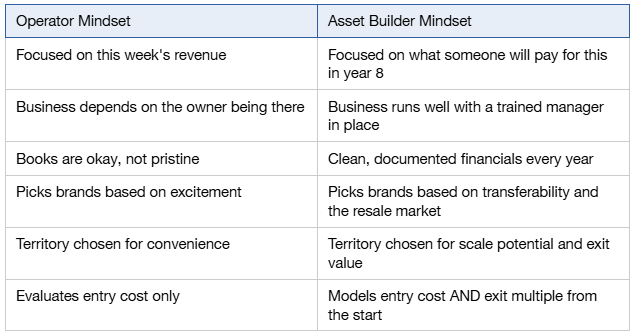
The good news is that the habits that produce a great exit are the same habits that make the business run better day to day. Clean books help you make better decisions. Trained managers give you your time back. Documented systems reduce stress and increase enterprise value.
The Questions That Only Make Sense When You Think Long-Term
Item 7 and Item 19 in the FDD tell you the investment required and what units typically produce. But no document tells you what those numbers mean for your actual life.
Here are the questions worth sitting with before you sign:
- What does this business need to generate annually to replace my current income?
- At what point does it become something another operator would want to buy?
- What year do I want to exit, and what needs to be true about the business by then?
- What does a realistic exit multiple look like for this brand in this category?
- Am I building one unit or scaling toward multi-unit to maximize exit value?
How to Spot Brands Built for a Good Exit
Not every franchise is designed to be easy to sell. Here is what to look for:
- Strong name recognition in its category, not just in one region
- Healthy Item 19 data showing consistent franchisee profitability over multiple years
- Low litigation history in Item 3, which signals a healthy franchisor-franchisee relationship
- An active resale market (ask directly how many units have been resold and at what multiples)
- A corporate infrastructure that functions well without you there every single day
Build It Like Someone Is Going to Buy It
Operators who document their systems, develop strong managers, and keep clean books consistently produce better exits. Building toward an exit does not mean you are not committed to the business. It means you are committed to building something worth owning and worth buying.
Most buyers spend weeks on the entry: the brand research, the territory, the opening-day math. Nobody maps the exit until they are almost ready to have one, and by then the decisions that shaped it are already locked in. That is the part we close together.
Work through your exit model at the free monthly deep dive, and we will run the numbers live, before you sign anything, so the strategy and the sale are built from the same day one.